Home → Products → Lifting Equipment → Spring Retractors
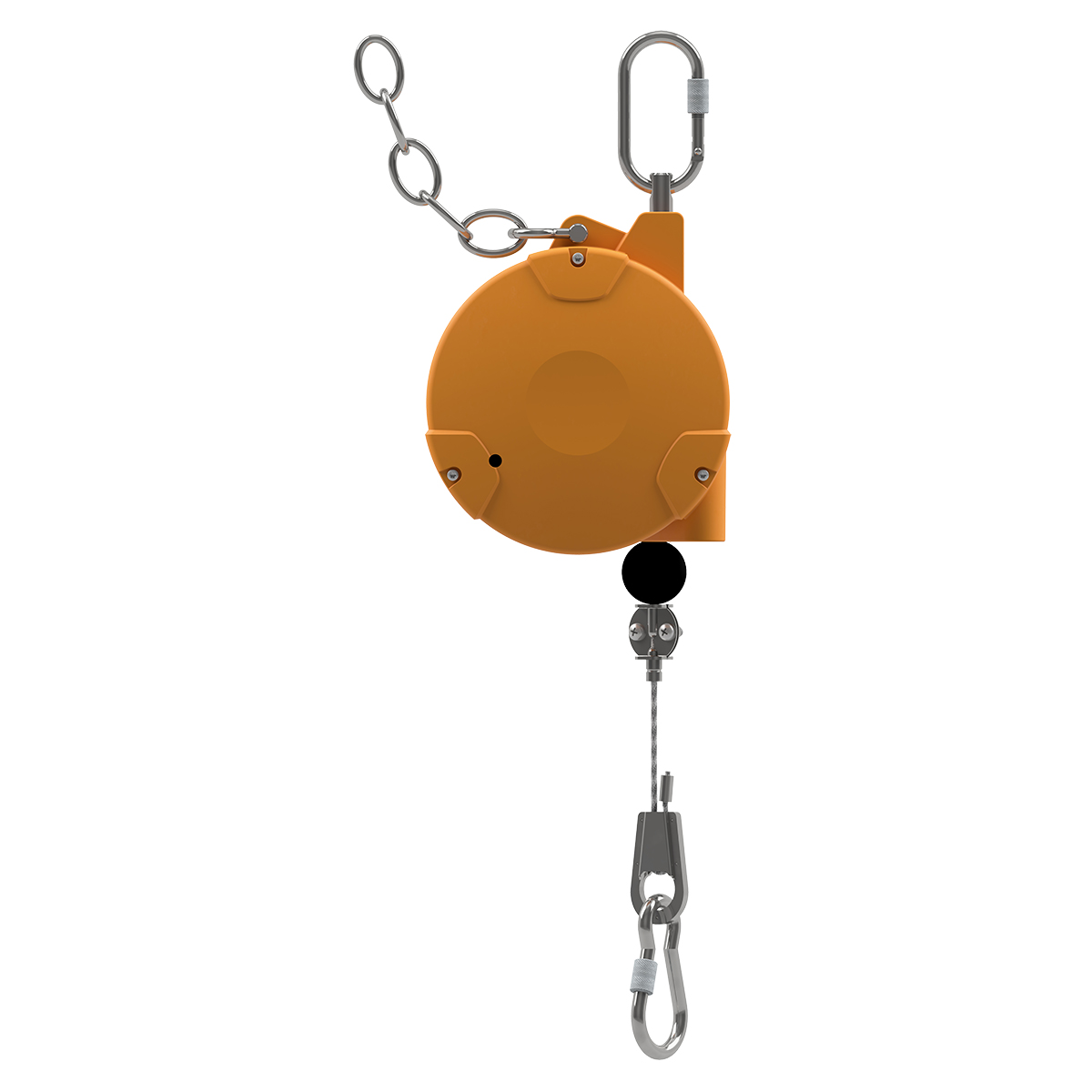
Spring Retractors
Our range includes spring retractors for different tool weights, working strokes and applications, with options for power tools, pneumatic equipment and specialist working environments.
Whether you need to keep a hand tool within easy reach or automatically return equipment after each operation, we can help you select the right spring retractor for your application.
Spring retractors are designed to automatically return suspended tools and equipment to their starting position after use, helping keep workstations organised while keeping tools readily accessible.
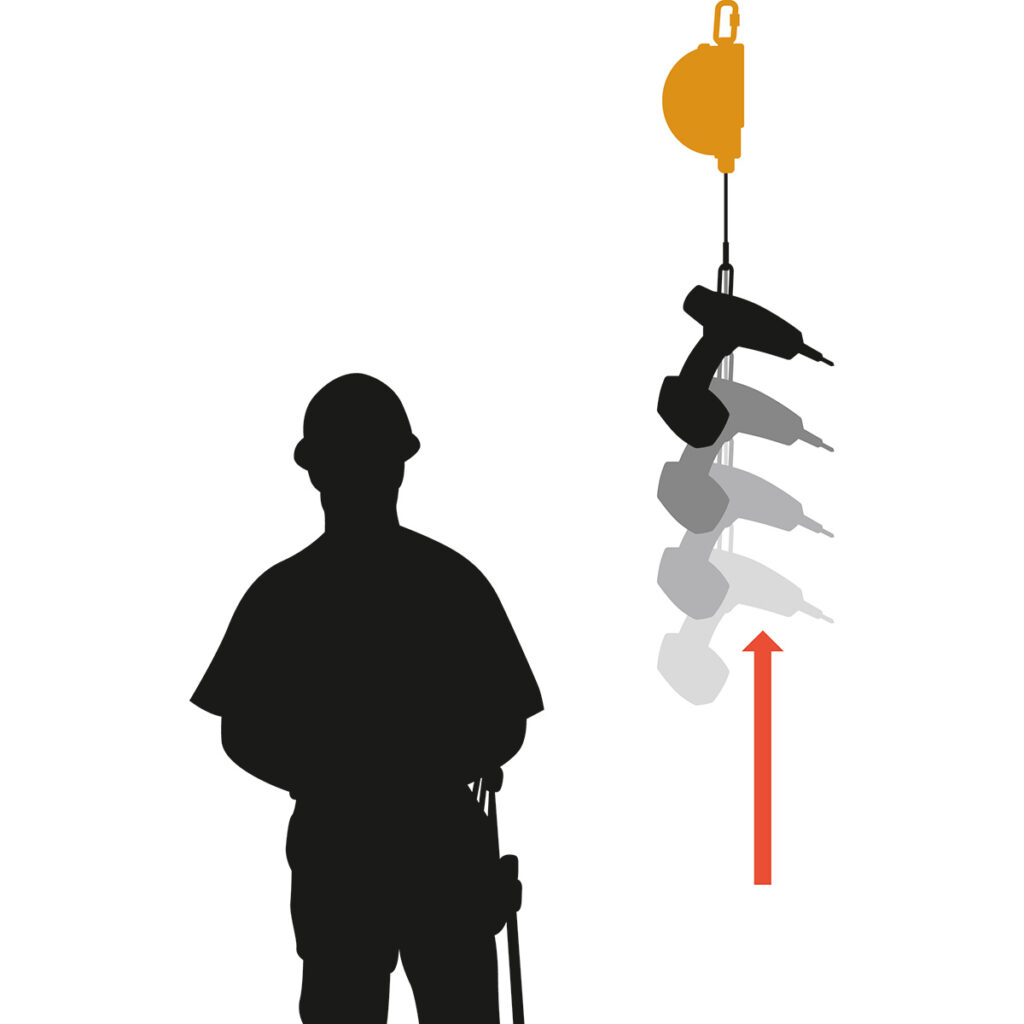
A retractor allows the operator to pull a suspended tool down into the working area when required. When released, the spring mechanism retracts the cable and returns the tool towards its initial position.
This makes spring retractors particularly useful for repetitive assembly and production tasks where tools need to be used frequently but should remain safely out of the way when not in use.
Carl Stahl Evita supplies KROMER spring retractors in different load capacities, cable travels and configurations to suit a range of industrial applications.
Automatic Tool Return
Organised Workstations
Improved Accessibility
Automatic Retraction After Use
Spring retractors use a spring mechanism to create increasing retraction force as the cable is extended.
The operator pulls the attached tool down into the working area, with the retraction force helping to return the tool when it is released. The cylindrical spring design provides increasing retraction force as the cable extends, allowing the tool to be automatically returned towards its starting position.
This automatic return helps prevent tools from being left on work surfaces or in areas where they could obstruct the operator or workstation.
Different Retractors for Different Applications
Spring retractors are available in different configurations to suit the weight of the tool, required cable travel and working environment.
Industrial Retractors
Designed for general industrial and production applications where tools need to be automatically returned to their starting position.
Rust-Free Retractors
Designed for humid or demanding environments, with corrosion-resistant components and stainless steel cables available for applications such as food processing.
Hose Retractors
Designed with an integrated compressed-air hose for applications using pneumatic tools, helping combine tool support with hose management.
Specialist Configurations
Retractors can also be selected or configured for particular workstation requirements and applications where standard solutions may not be suitable.
Our Spring Retractors
Our current range includes Type 5200, Type 7200, Type 7211/7212 and Type 7221/7222, covering load ranges from 0.0 kg to 14 kg and cable travels from 1.6 m to 3 m. Options include models with automatic ratchet locks, rust-free construction and hose configurations for pneumatic tools.
Explore our spring retractors below, or contact our team for advice on selecting the right model based on your tool weight, required cable travel and working environment.
Need help choosing the right chain hoist?
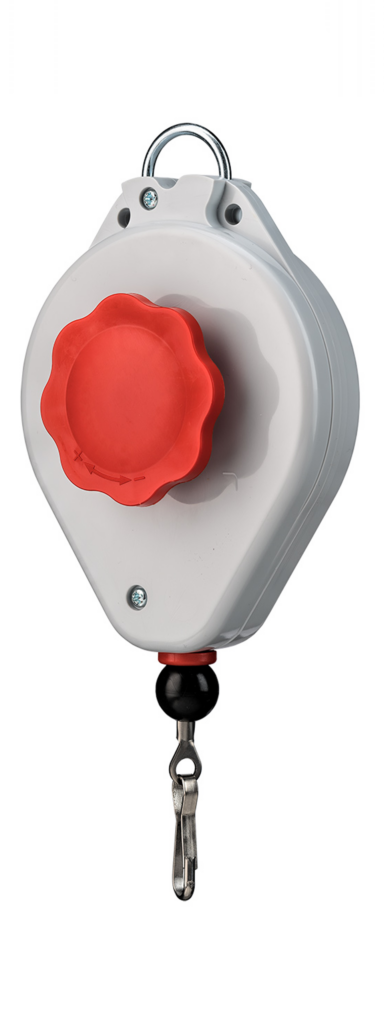
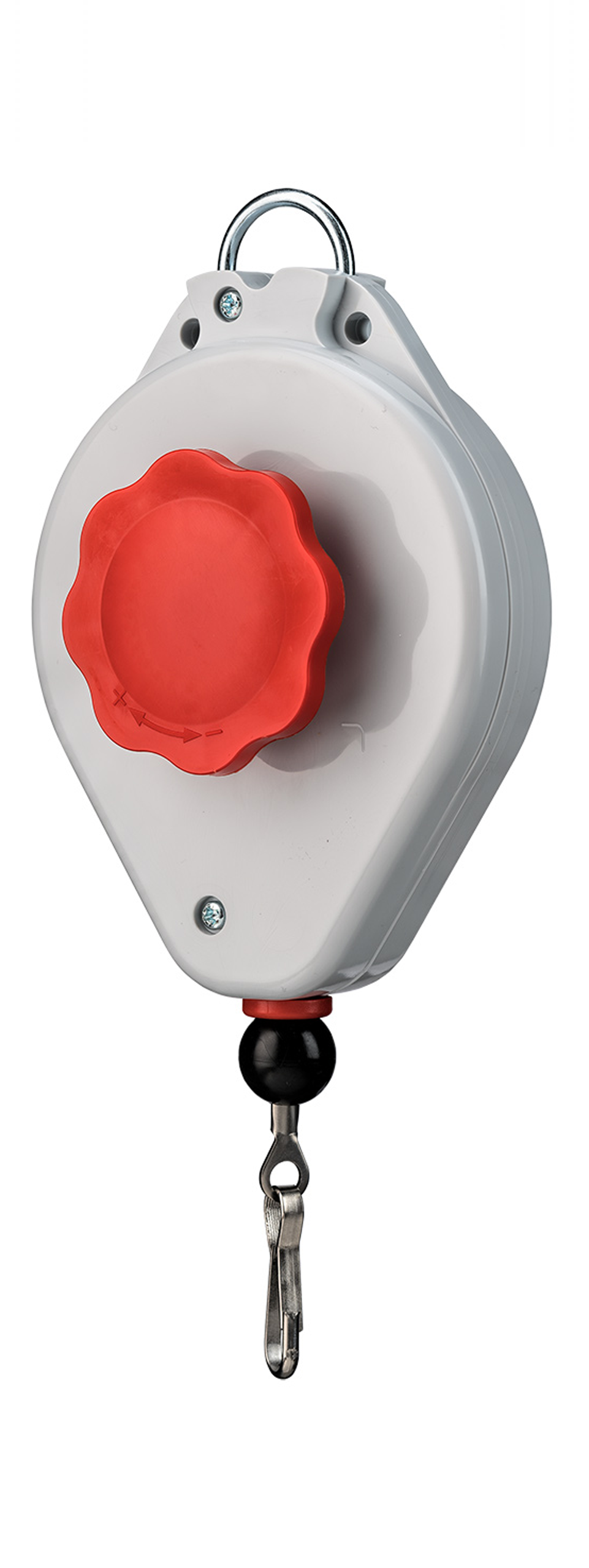
KROMER Type 5200
- Load ranges from 0.5–2.0 kg
- 2,000 mm cable travel
- High-strength special suspension spring
- High-strength polyamide cable
- Impact- and abrasion-resistant plastic housing
- Abrasion-resistant plastic cable drum
- Easy load adjustment via handwheel
- Elastic cable stop buffer
- Light-duty spring hook for load suspension
- Electrically insulated suspension
- Rigid, closed design
- Fall protection included as standard
- Special banded spring
- Manufactured to DIN 12100
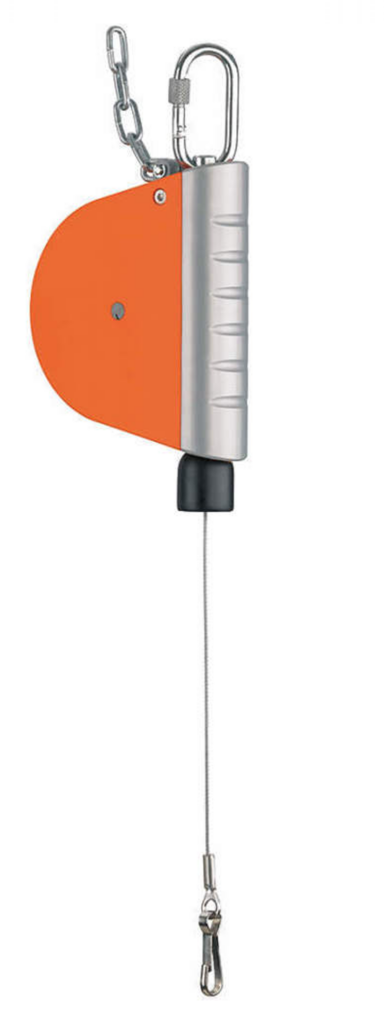
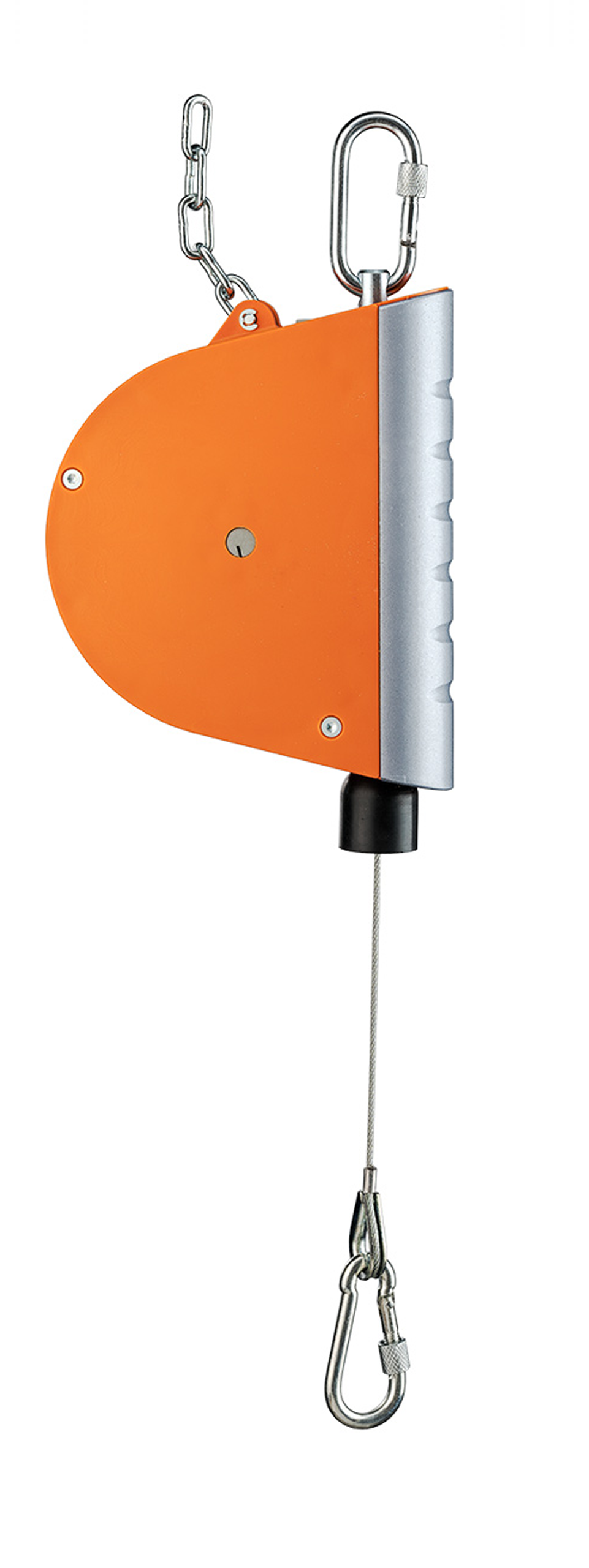
KROMER Type 7200
- Load ranges from 0–2.5 kg
- 1,600 mm cable travel
- High-strength steel cable
- High-strength special suspension spring
- Impact- and abrasion-resistant plastic housing
- Abrasion-resistant plastic cable drum
- Infinitely adjustable cable stop buffer
- Freely rotating and swivelling screw-type spring hook
- Easy load setting
- Electrically insulated suspension
- Rigid, impact-resistant design
- Closed unit
- Safety chain included for fall protection
- GS-certified
- Manufactured to DIN 15122 and DIN 12100
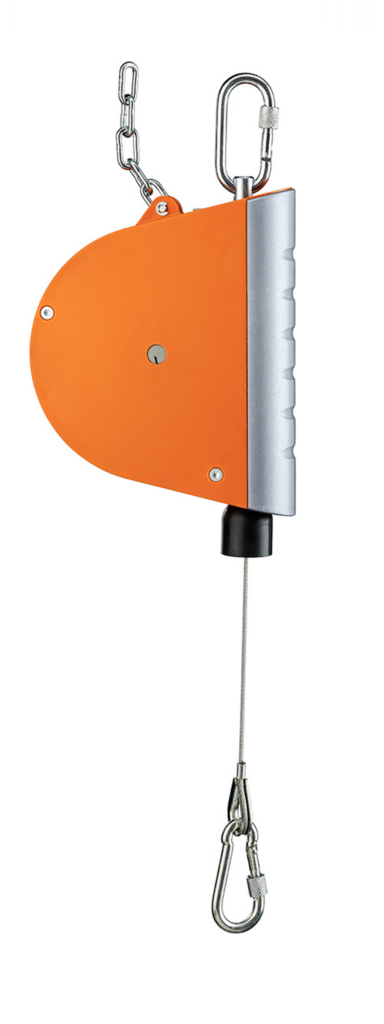
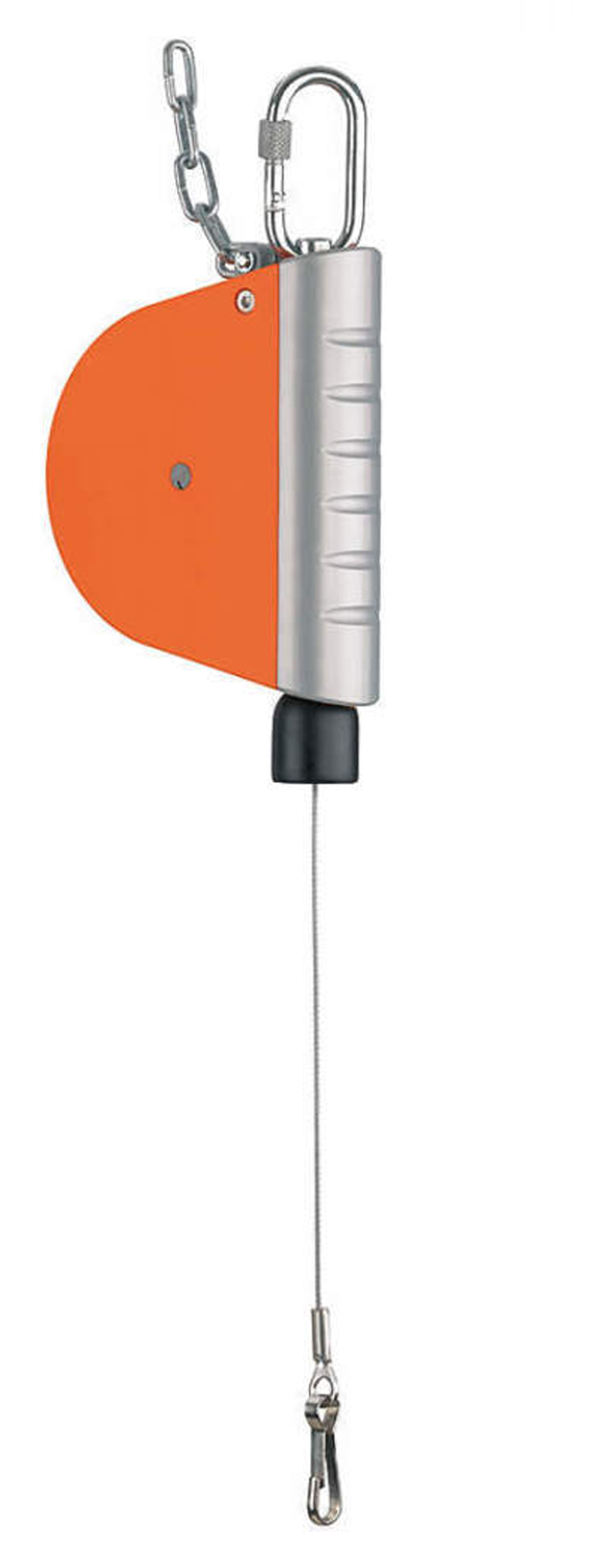
KROMER Type 7211 / 7212
- Load ranges from 0.5–5.5 kg
- 2,500 mm or 1,400 mm cable travel
- High-strength steel cable
- High-strength special suspension spring
- Impact- and abrasion-resistant plastic housing
- Abrasion-resistant plastic cable drum
- Infinitely adjustable cable stop buffer
- Freely rotating and swivelling screw-type spring hook
- Easy load setting
- Electrically insulated suspension
- Closed, impact-resistant design
- Safety chain included for fall protection
- Spring fracture safeguard from 3.0 kg capacity
- GS-certified
- Manufactured to DIN 15122 and DIN 12100
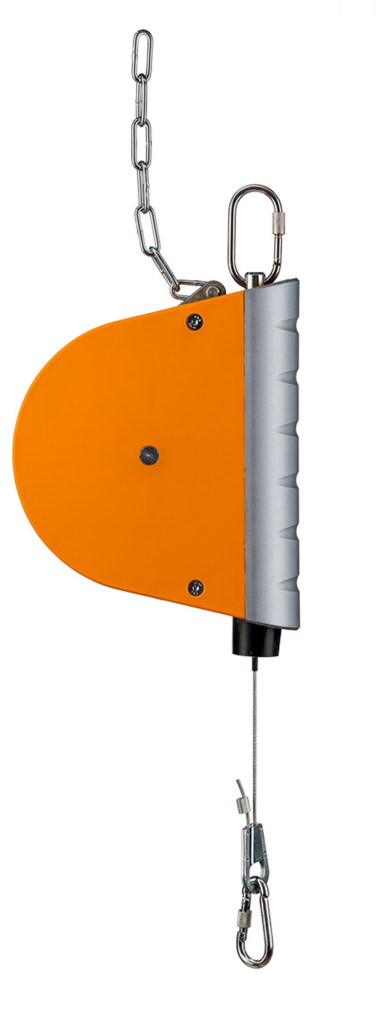
KROMER Type 7221 / 7222
- Load ranges from 2–14 kg
- 3,000 mm cable travel
- High-strength steel cable
- High-strength special suspension spring
- Impact- and abrasion-resistant plastic housing
- Abrasion-resistant plastic cable drum
- Infinitely variable load setting
- Infinitely adjustable cable stop buffer
- Infinite cable-length adjustment via cable wedge
- Freely rotating and swivelling screw-type spring hook
- Electrically insulated suspension
- Integrated cable drum locking mechanism
- Safety chain included for fall protection
- Spring fracture safeguard
- GS-certified
- Manufactured to DIN 15122 and DIN 12100
Download technical information
Not sure which spring retractor you need?
Stock and delivery
CAN'T FIND WHAT
YOU'RE LOOKING FOR?
What is a Spring Retractor?
Spring retractors are commonly installed above assembly and production workstations, where tools such as power and pneumatic tools need to be used repeatedly. The operator can pull the tool down into the working area when required, before releasing it and allowing the retractor to return it towards its starting position.
Unlike a spring balancer, which is designed to compensate for the weight of a tool and allow it to be positioned within the working area, a retractor is designed primarily for automatic return. This makes retractors particularly useful where tools need to be kept consistently within reach but returned out of the way after each operation.
Different retractor configurations are available for varying tool weights, cable travels and working environments. Options include standard industrial retractors, rust-free versions for demanding environments and hose retractors for pneumatic tools.
Carl Stahl Evita supplies KROMER spring retractors for a range of tool-handling applications, helping customers select a suitable solution based on the tool weight, required working range and operating environment.
Choosing the Right Spring Retractor
Tool Weight
Cable Travel
Retraction & Locking
Working Environment
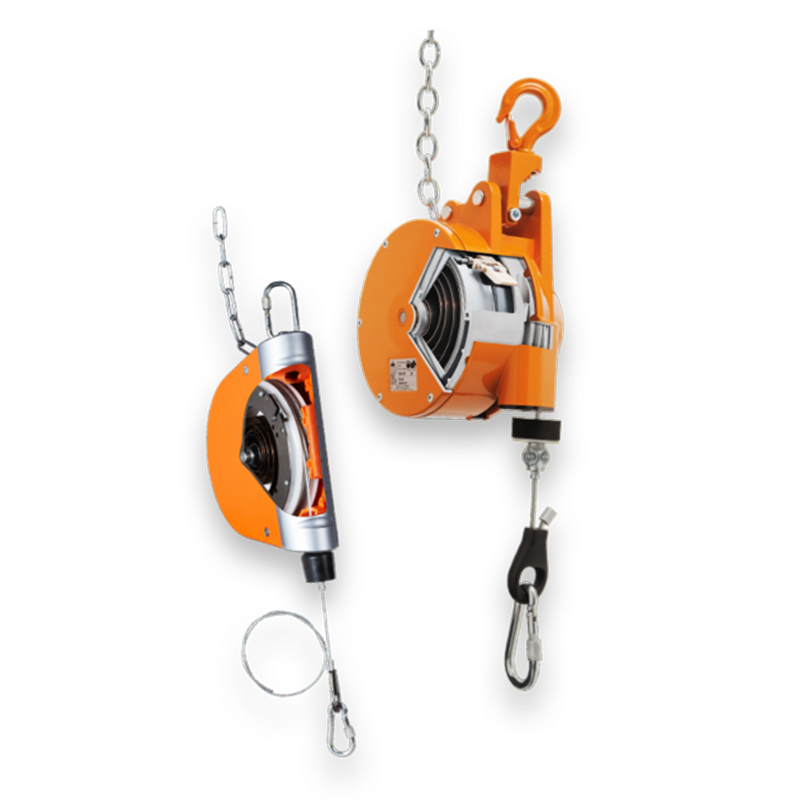
Retractors, Balancers and Positioners
Retractors automatically return a suspended tool or piece of equipment towards its starting position when released. They are useful for keeping tools within easy reach while maintaining an organised and unobstructed workstation.
Balancers
Balancers compensate for the weight of suspended tools or equipment, allowing them to be moved with minimal effort and held in a desired position. They are particularly suited to repetitive assembly and production work where precise tool handling is required.
Positioners
Positioners are designed to hold tools or equipment at a defined working height. They allow the position to be adjusted while providing a stable hold, making them useful where repeatable positioning is important.
Specialist Configurations
Spring balancers and related products are also available in specialist configurations for environments with particular requirements, including rust-free, hose, ATEX and ESD versions. Kromer
Typical Uses for Spring Retractors
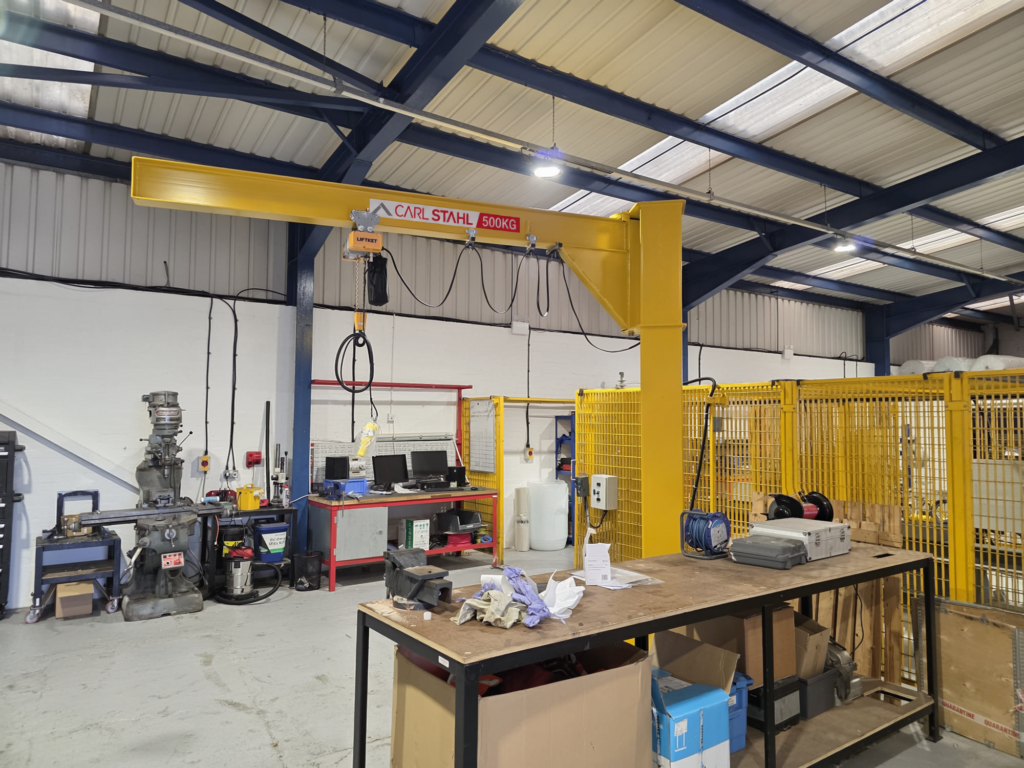
Assembly & Production
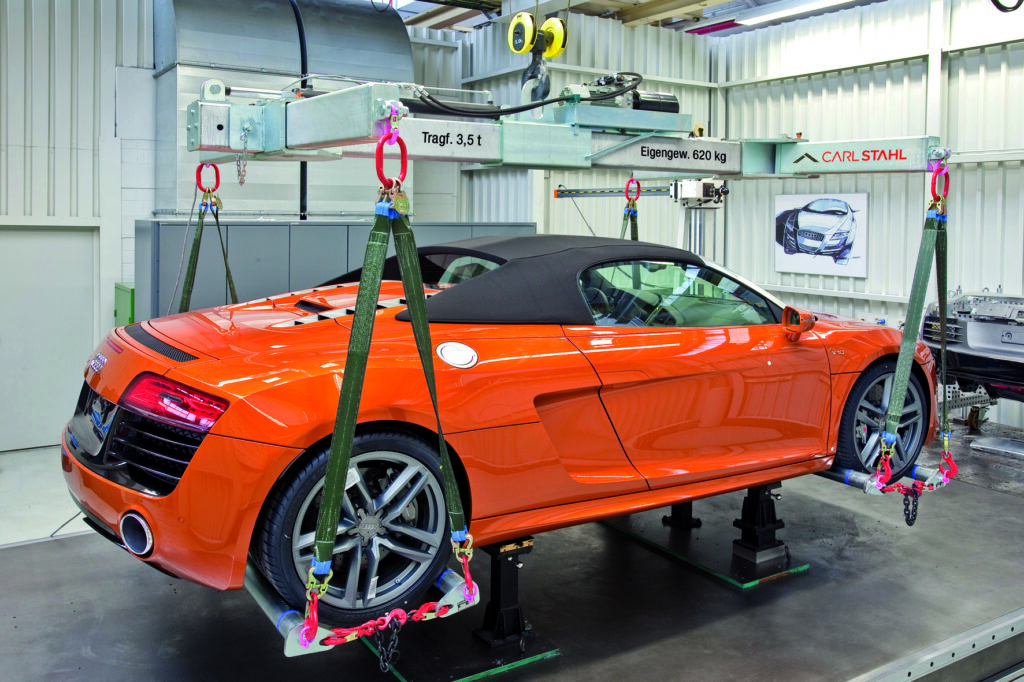
Automotive Manufacturing
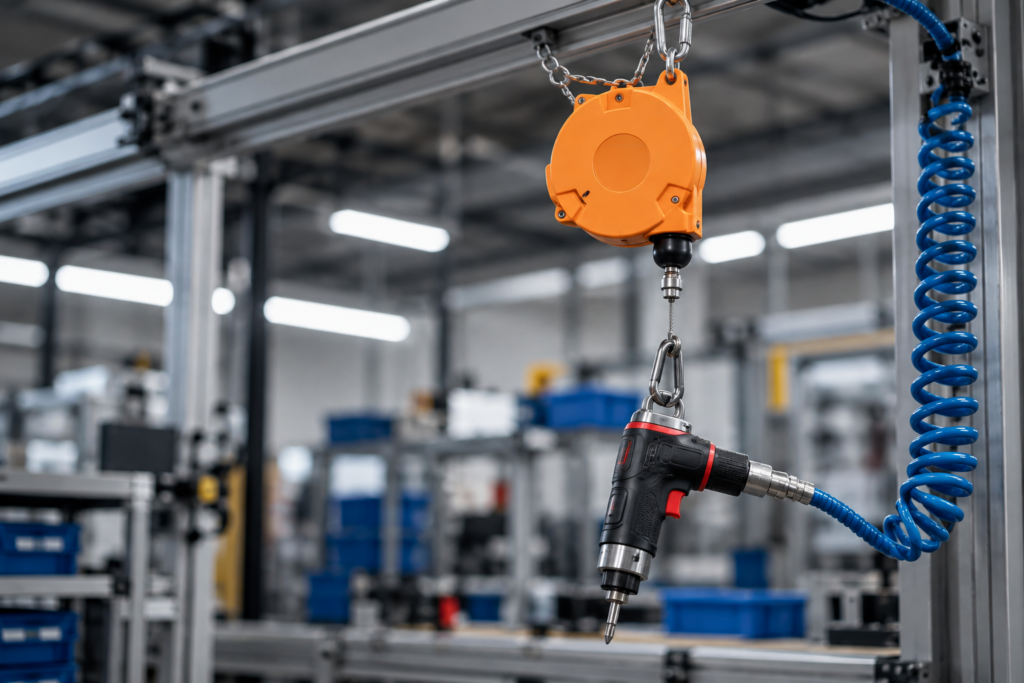
Pneumatic & Power Tools
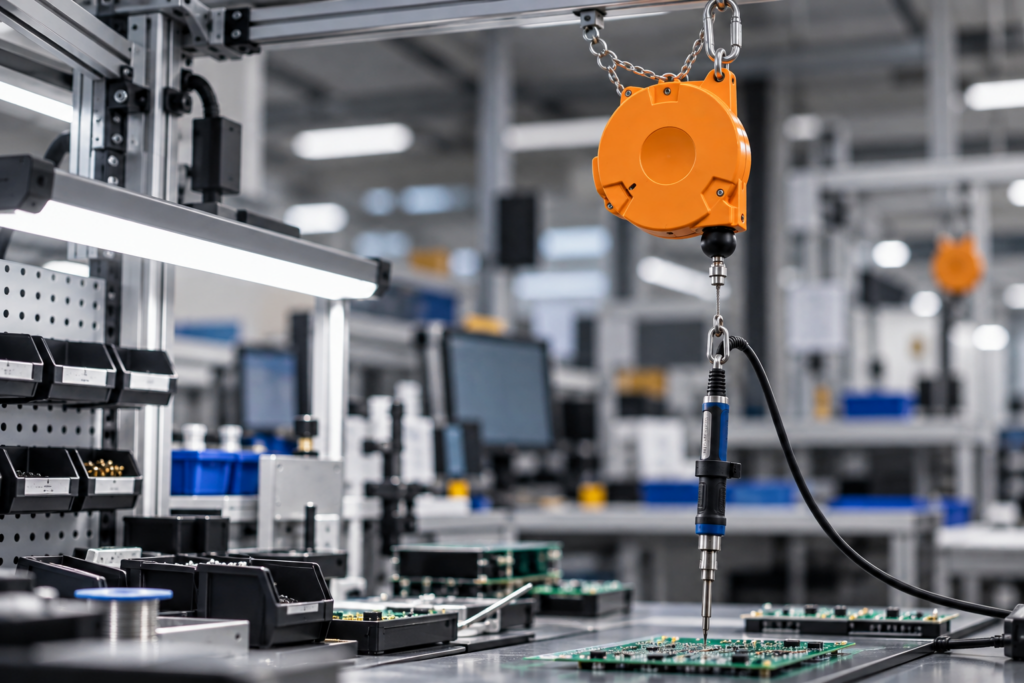
Electronics & Precision Work
Frequently Asked Questions
1. What is a spring retractor used for?
A spring retractor is used to suspend tools and equipment and automatically return them to their starting position after use. This helps keep tools accessible while maintaining a more organised workstation.
2. How does a spring retractor work?
A spring retractor uses a spring mechanism to retract its cable as the attached tool is released. The operator pulls the tool down into the working area and, when released, the tool is automatically returned towards its starting position.
3. How do I choose the right spring retractor?
The retractor should be selected according to the weight of the tool or equipment being suspended, the required cable travel and how the tool needs to behave during use. The working environment and any specialist requirements should also be considered.
4. How much weight can a spring retractor support?
KROMER spring retractors are available for different load ranges, from lightweight models starting at 0 kg through to models supporting up to 14 kg. The appropriate model depends on the weight of the suspended tool.
5. How much cable travel do I need?
The required cable travel depends on how far the tool needs to be pulled down during operation. KROMER retractors are available with cable travels ranging from approximately 1.4 m to 3 m, depending on the model and capacity. Longer cables may also be available on request.
6. What is the difference between a spring retractor and a spring balancer?
A spring retractor is primarily designed to automatically return a tool to its starting position. A spring balancer is designed to compensate for the weight of a tool, allowing it to be moved and positioned with minimal effort within the working area.
7. Are spring retractors available with a locking mechanism?
Yes. Selected KROMER retractors are available with an automatic ratchet lock, which can hold the suspended tool in defined positions rather than requiring it to return fully to its starting position after every operation.
8. Do spring retractors require inspection and maintenance?
Yes. KROMER recommends regular checks of spring retractors and their components. Daily visual checks should include the cable, suspension and fall-protection components, while periodic inspection and maintenance should be carried out by a competent or qualified person as appropriate.